Y December 2025

Selected Works
November 25, 2025

Featuring works by: 

Barbara Jardine

Brianna McCarthy

Che Lovelace

Christopher Cozier

Edward Bowen

Janice Derrick

Jasmine Thomas-Girvan

Mairi Millar

Richard Hubbard

Roberta Stoddart

Shannon Alonzo  

Kenwyn Crichlow

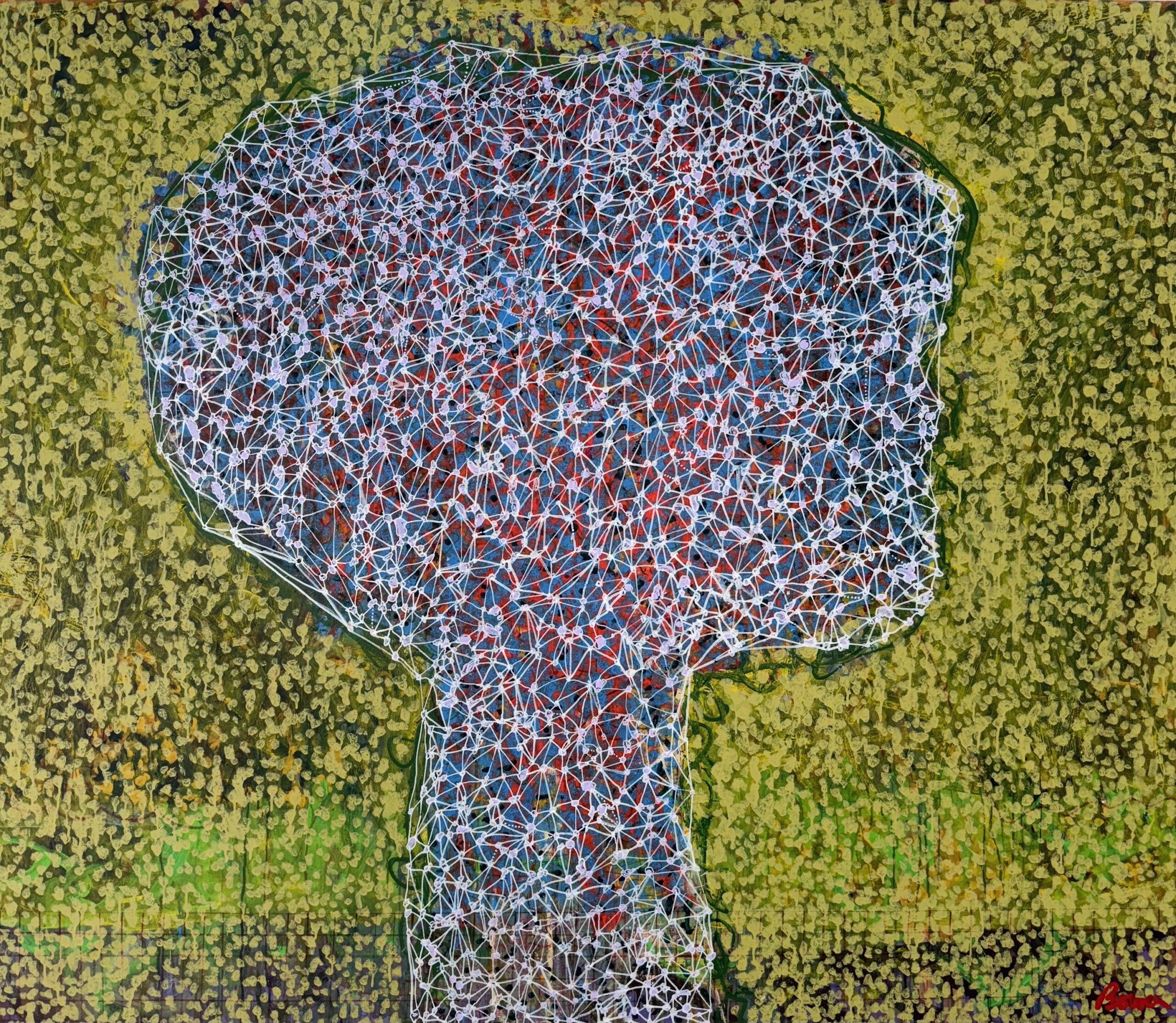
HEADSPACE

Edward Bowen
2025
Acrylic on canvas
4ft x 6ft 

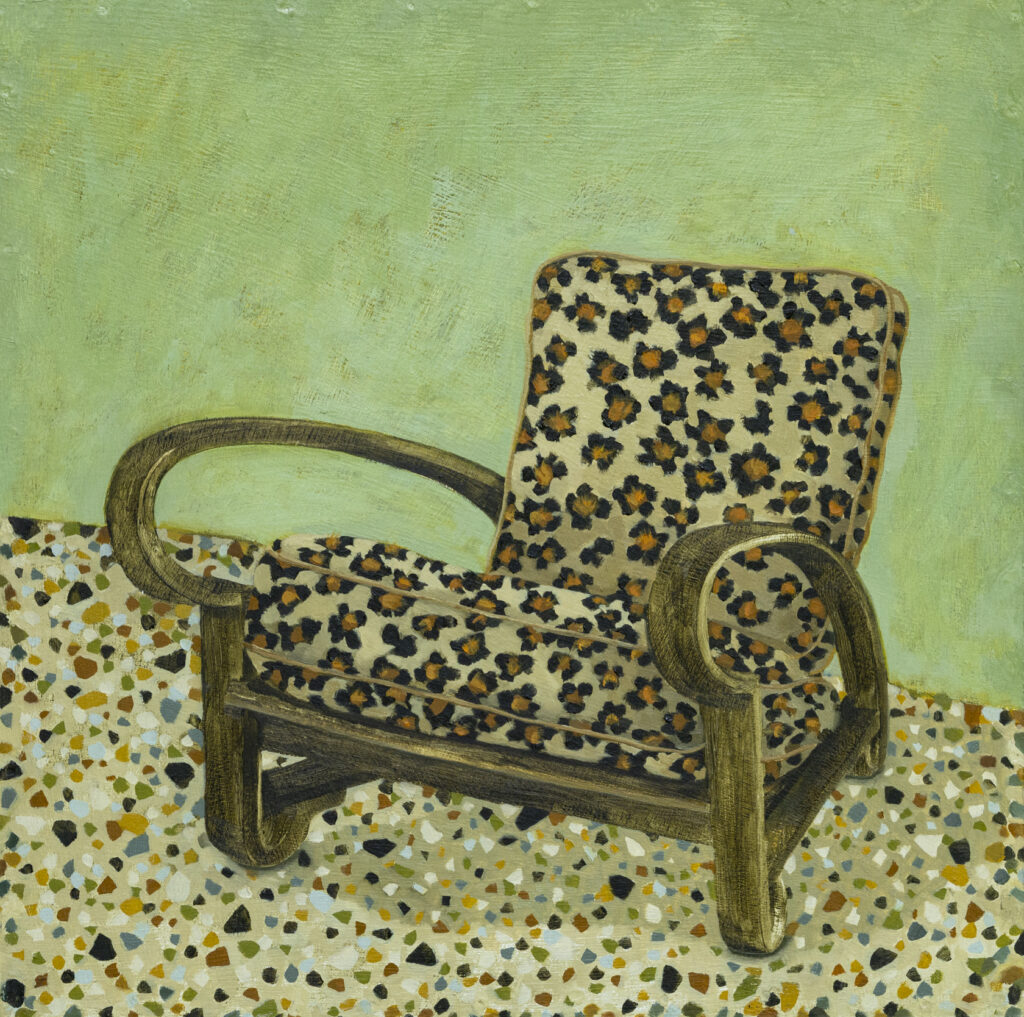
Rosettes

Roberta Stoddart 
2025
12 x 12 inches
Oil on hardboard

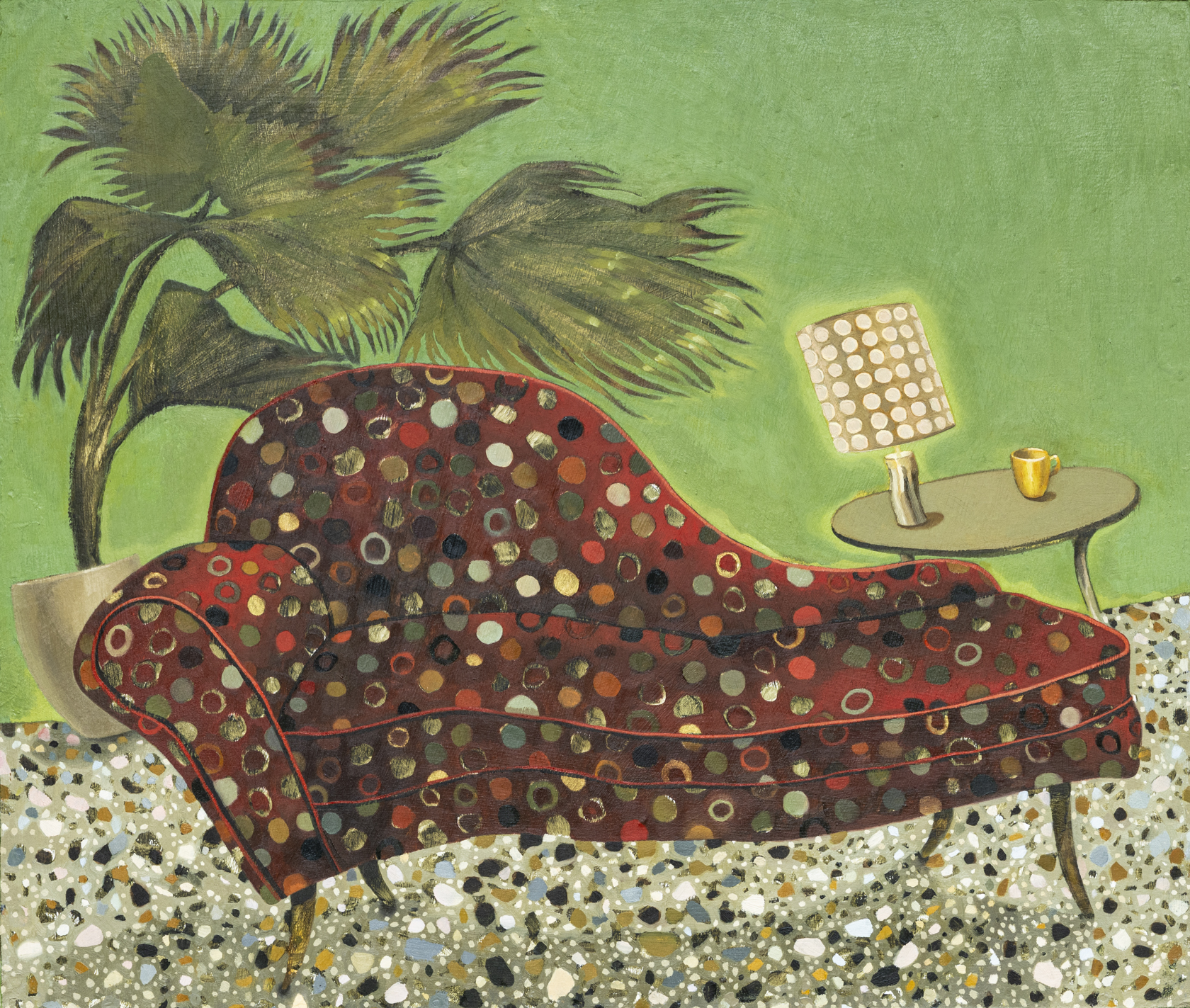
Surfing Scarlet

Roberta Stoddart 
2025
17 1/2 x 15 inches
Oil on Hardboard

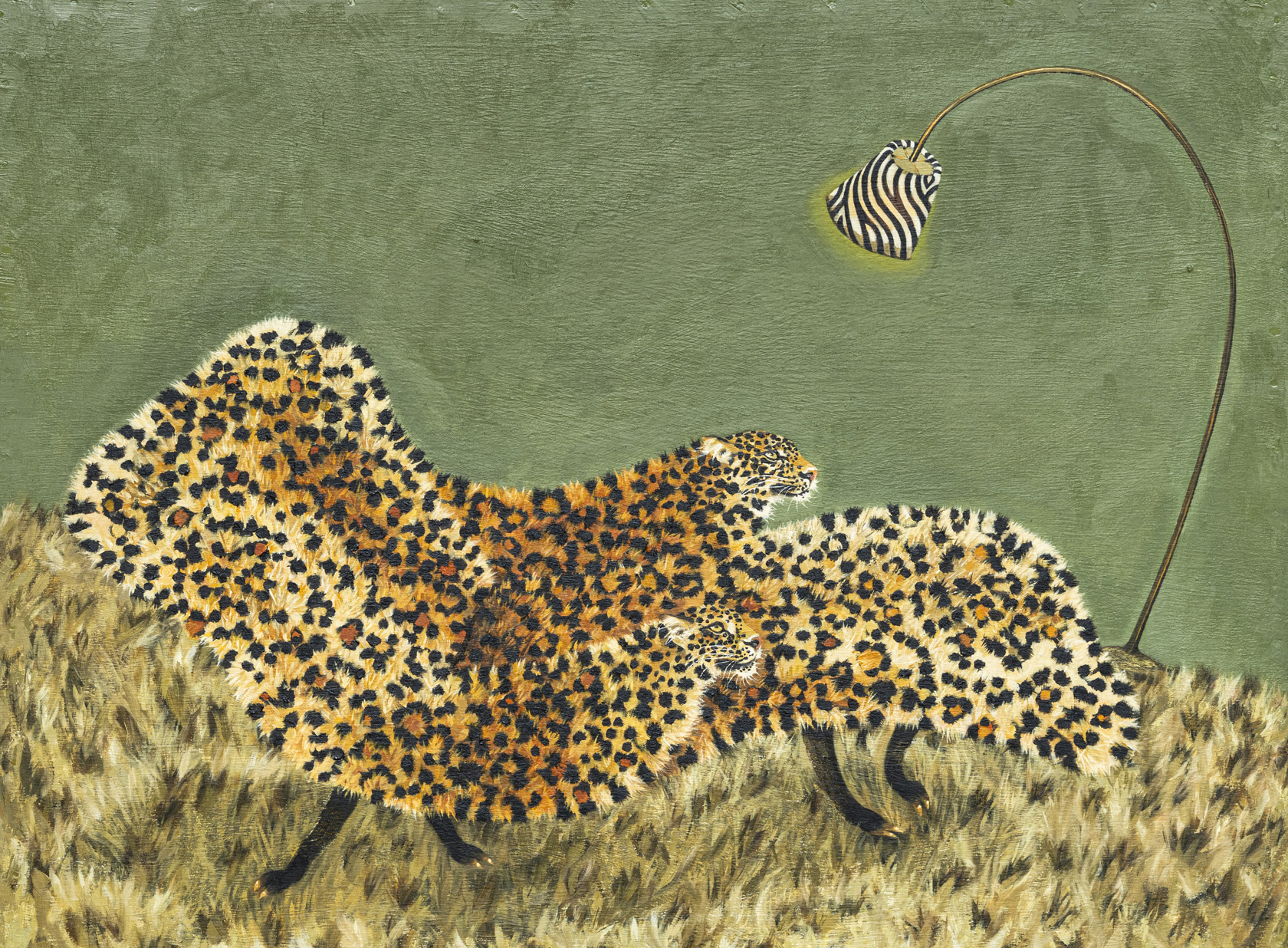
Leopard Lounger

Roberta Stoddart
2025
20 x 15 inches
Oil on hardboard

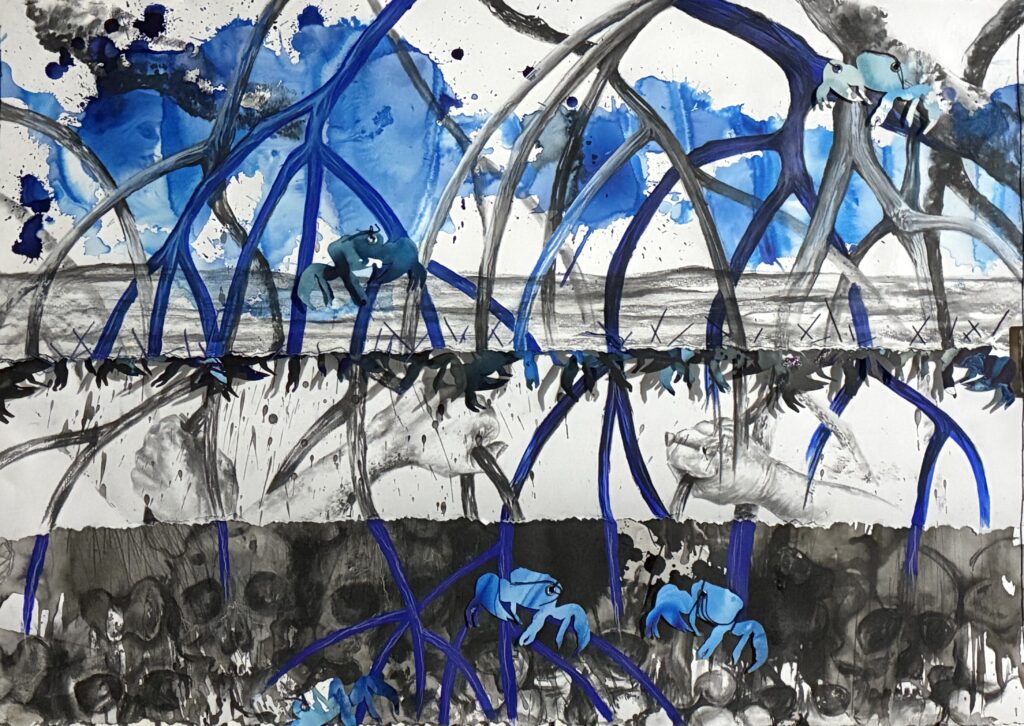
But what the leaves hear is not what the roots ask

Shannon Alonzo
Ink, pencil, charcoal, thread and grommets on paper
32 x 42 inches                                   

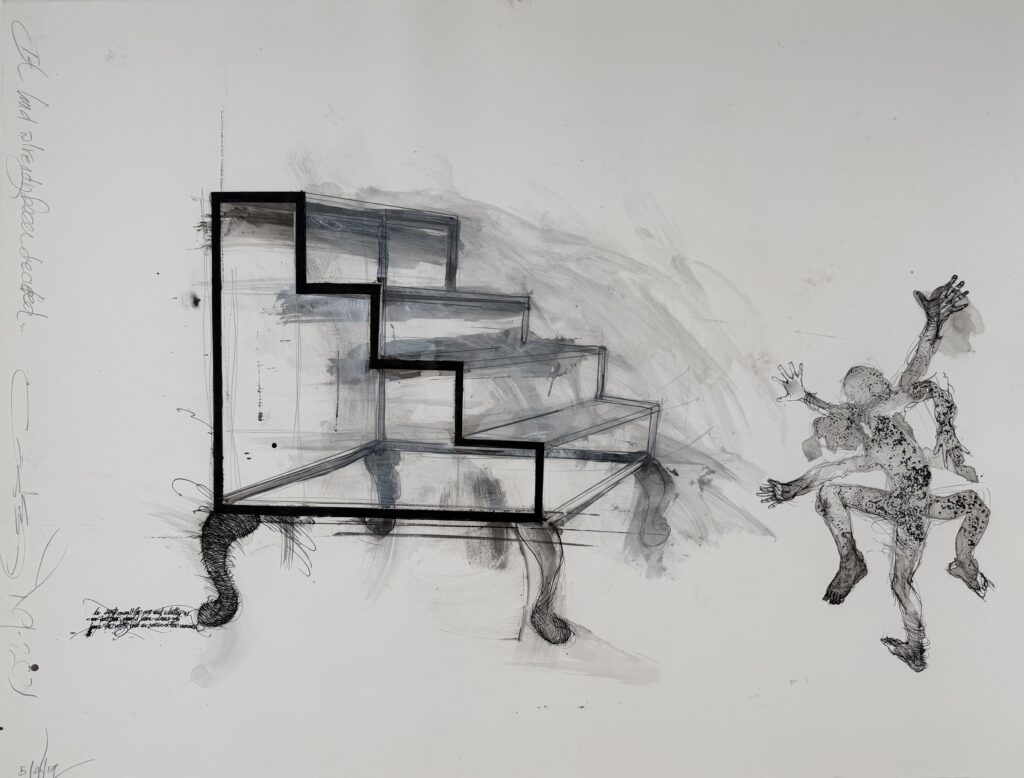
Bleachers study- It has already been decided

Christopher Cozier
Mixed media on paper
32 x 42 inches

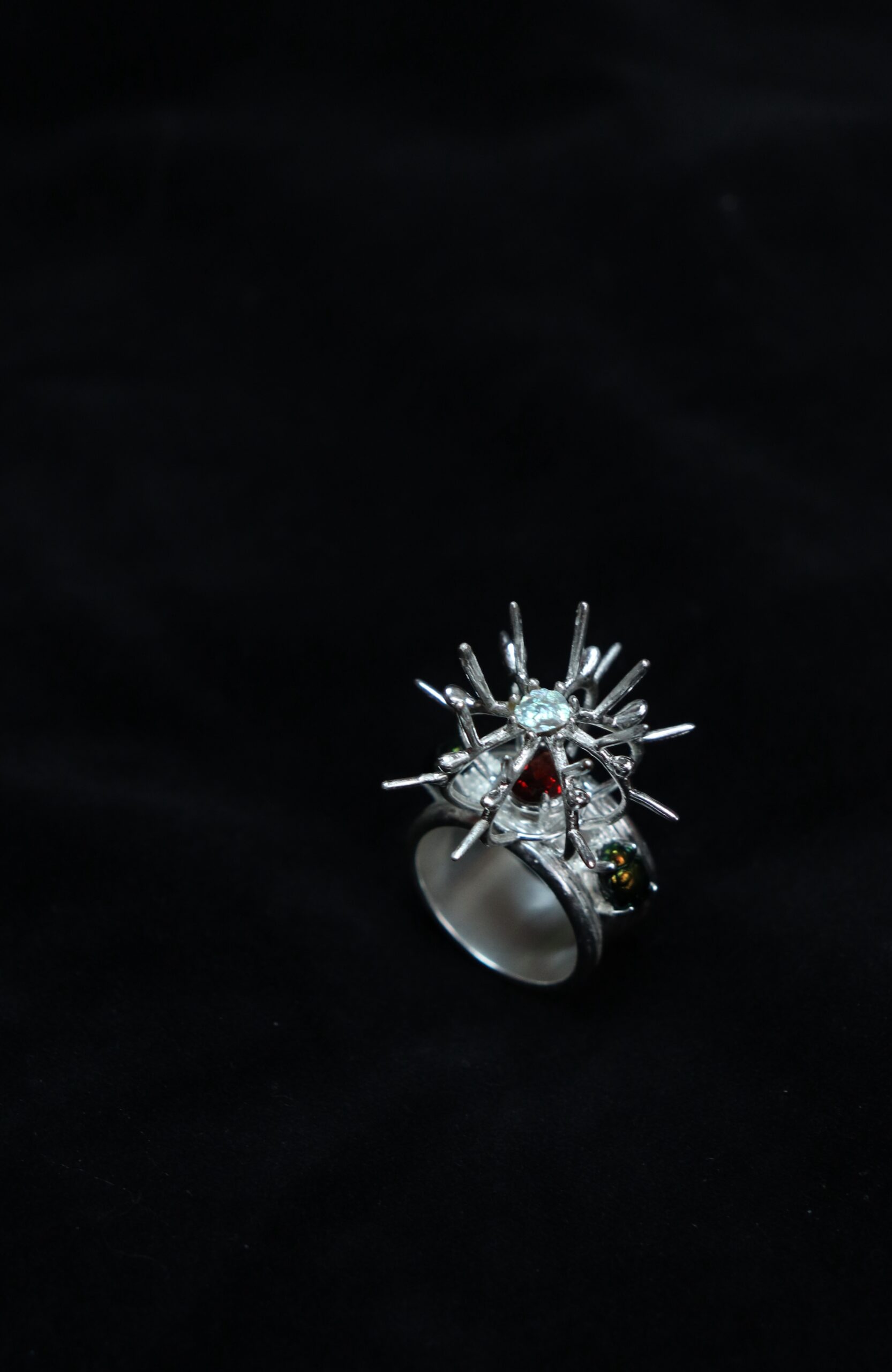
Imperial Ring

Mairi Millar

Sterling silver, green beetles, garnet, abalone shell

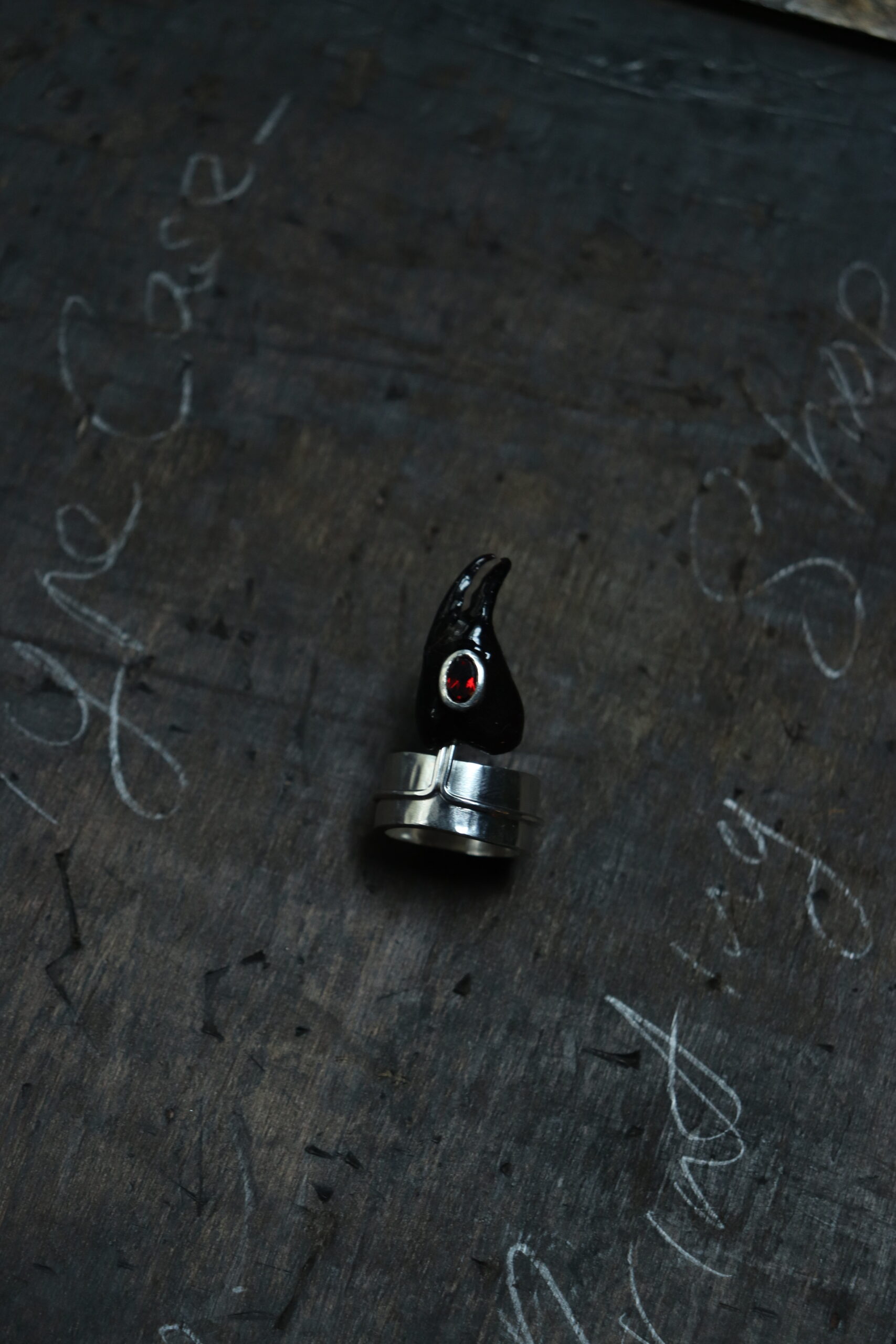
Scorpio Ring (garnet)

Mairi Millar

Sterling Silver, garnet, scorpion claw, resin

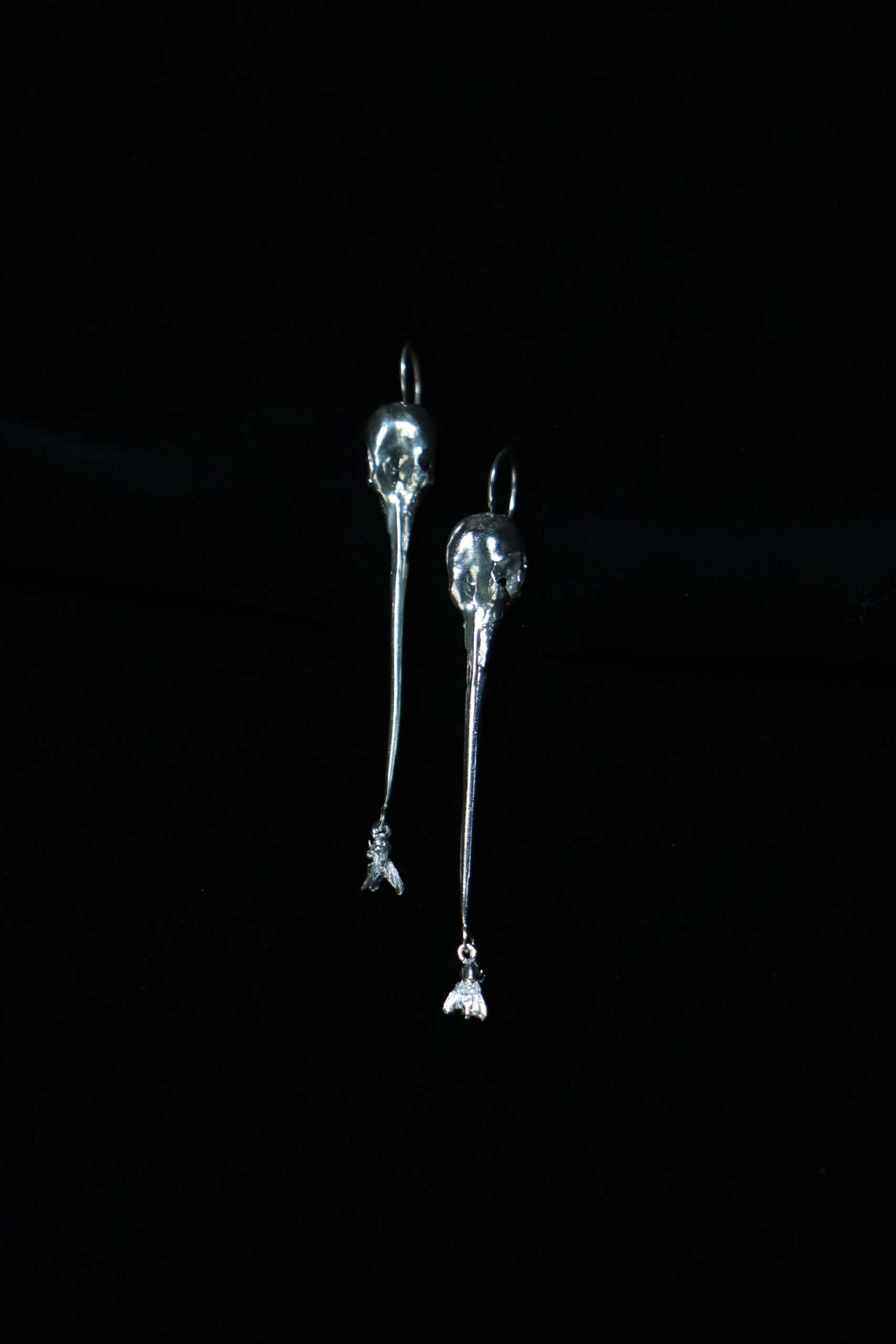
Lacrimosa Earrings

Mairi Millar

Sterling silver

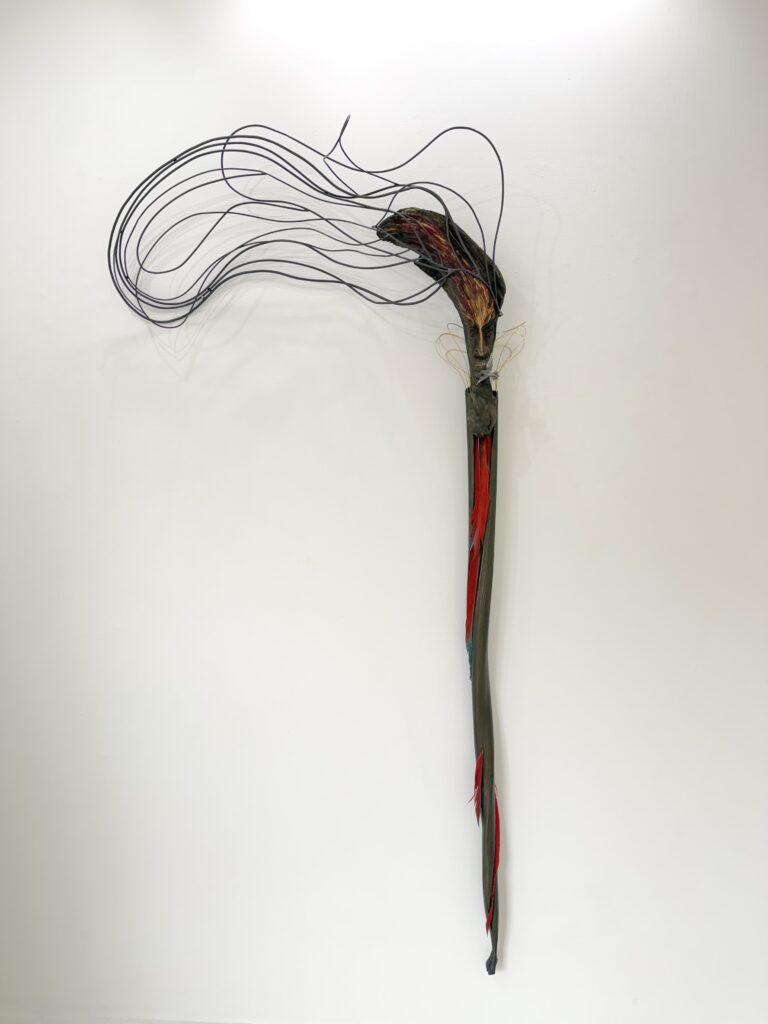
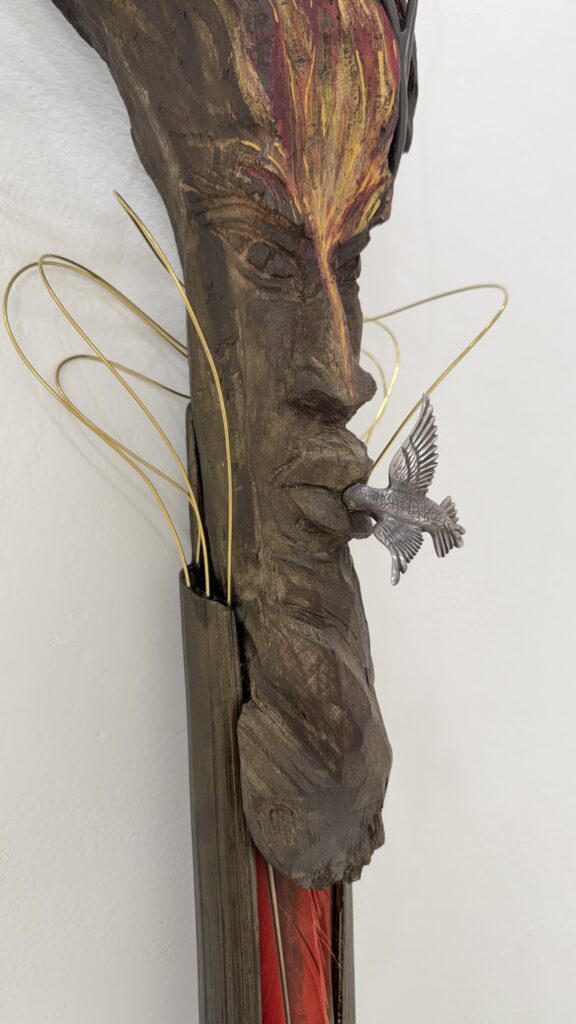
Ancestral Nourishment For Soaring

Jasmine Thomas-Girvan 
2025
Wood, steel, bronze wire, palm frond, macaw feathers, sterling silver and acrylic paint

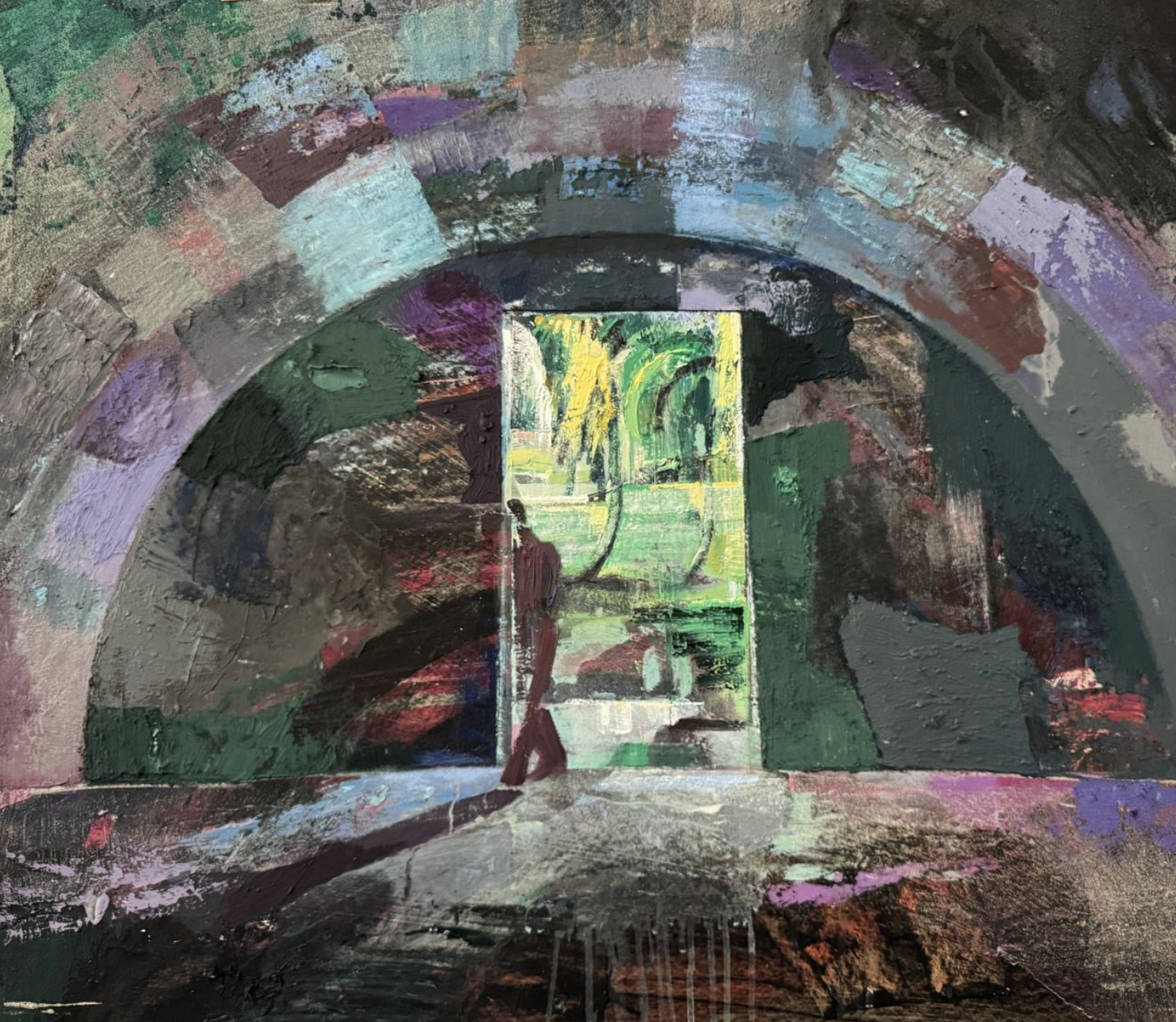
Bunker

Che Lovelace

2025

25 x 29 inches

Acrylic and dry pigment on board panel

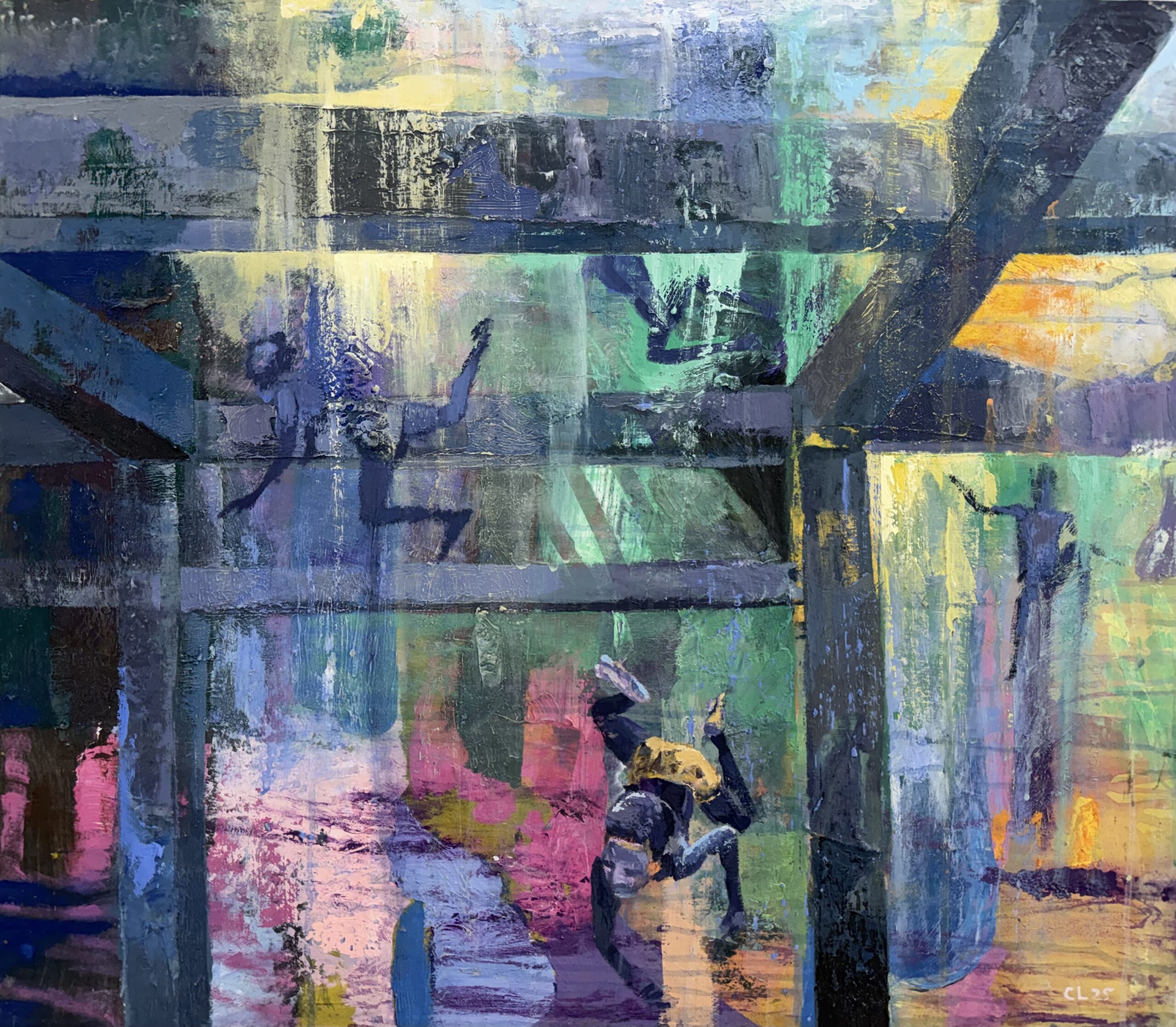
Young Swimmers close to Jetty Pylons

Che Lovelace

2025

25 x 29 inches

Acrylic and dry pigment on board panel

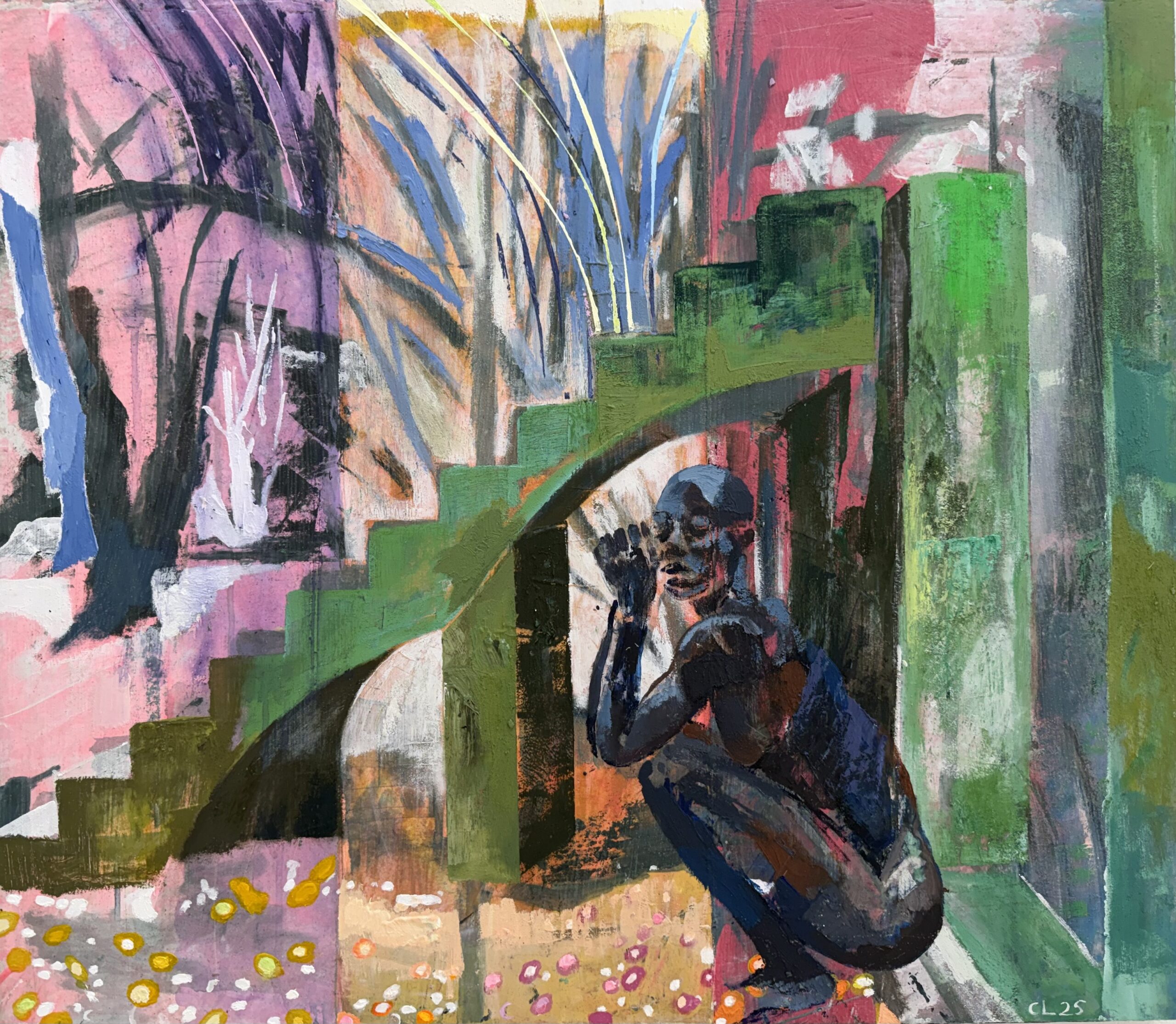
Figure with Staircase Ruin

Che Lovelace

2025

25 x 29 inches

Acrylic and dry pigment on board panel

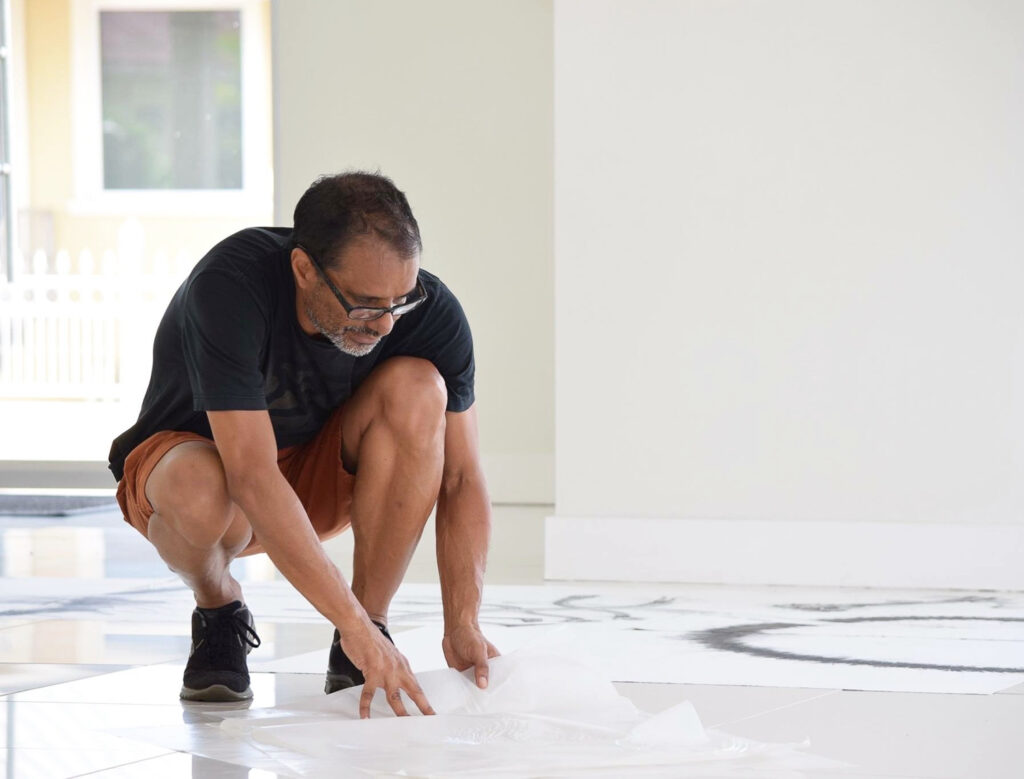
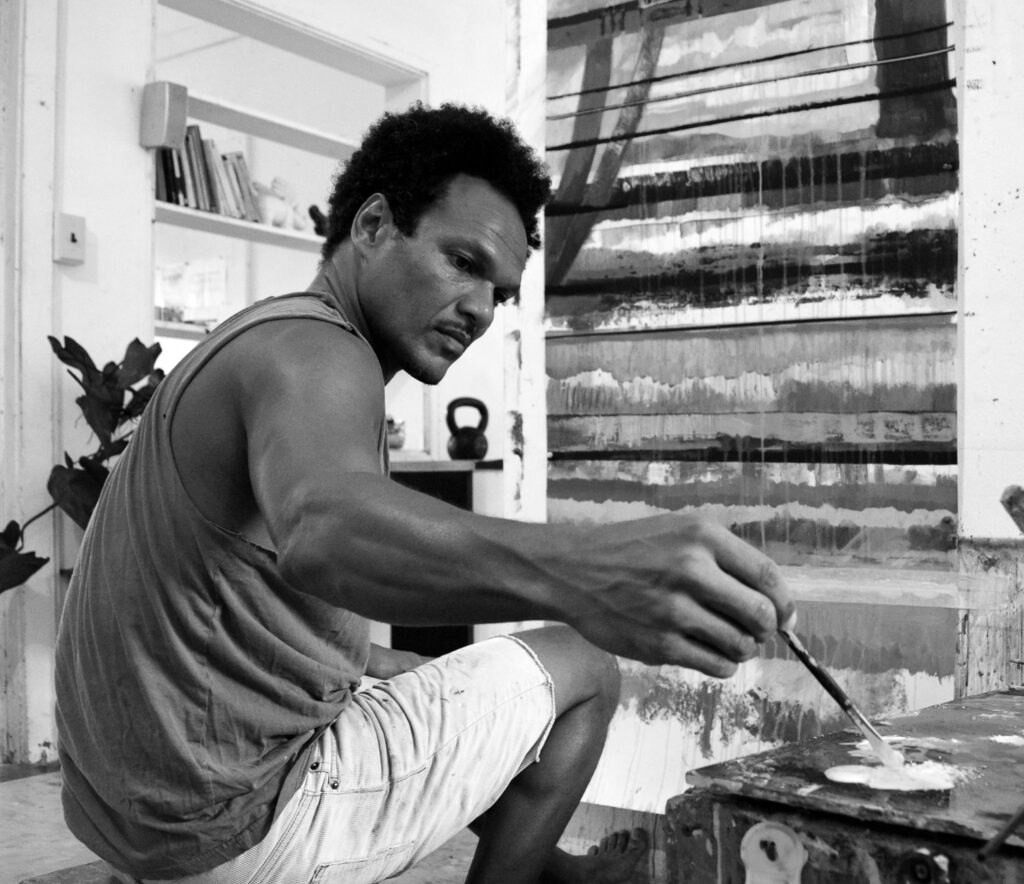
Edward Bowen

Born 1963, Eddie Bowen studied at Croydon College, UK from 1981-1985. He has since been living and working in Trinidad, often letting his environment in San Souci, be his muse. 


Image by Melissa Miller 

VIDEO NTERVIEW

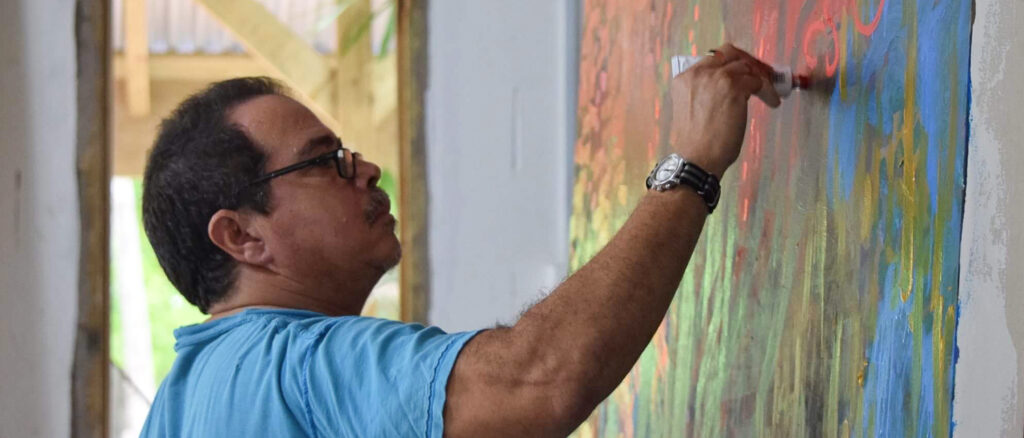
Christopher Cozier

Christopher Cozier is an artist, living and working in Trinidad and a co-director of Alice Yard, a collective, which will be participating in Documenta 15. 
He was awarded a Pollock-Krasner Foundation Grant in 2004 and is a Prince Claus Award laureate, 2013.
Through his notebook drawings to installations derived from recorded staged actions, Cozier investigates how Caribbean historical and current experiences can inform understandings of the wider contemporary world.
Exhibitions include the 5th & 7th Havana Biennials, Infinite Island, The Brooklyn Museum, (2007) Afro Modern: Journeys through the Black Atlantic (2010), TATE Liverpool,   Entanglements at the Broad Museum, Michigan 2015. Relational Undercurrents at MOLAA. L.A. (2017) and The Sea is History, Historiskmuseum, Oslo, 2019. Cozier participated in the public program of 10th Berlin Biennial, 2018, exhibited in the 14th Sharjah Biennial in 2019 ,  the 11th Liverpool Biennial in 2021, Industrial Art Biennial, Croatia, 2020 and currently in Más Allá, el Mar Canta (Beyond, the Sea Sings) at the Times Art Center, Berlin, as well as Fragments of Epic Memory at the AGO ( Art Gallery of  Ontario) and Experiences of Oil at the Stavanger Museum, Norway.


Image by Melissa Miller 

VIDEO INTERVIEW

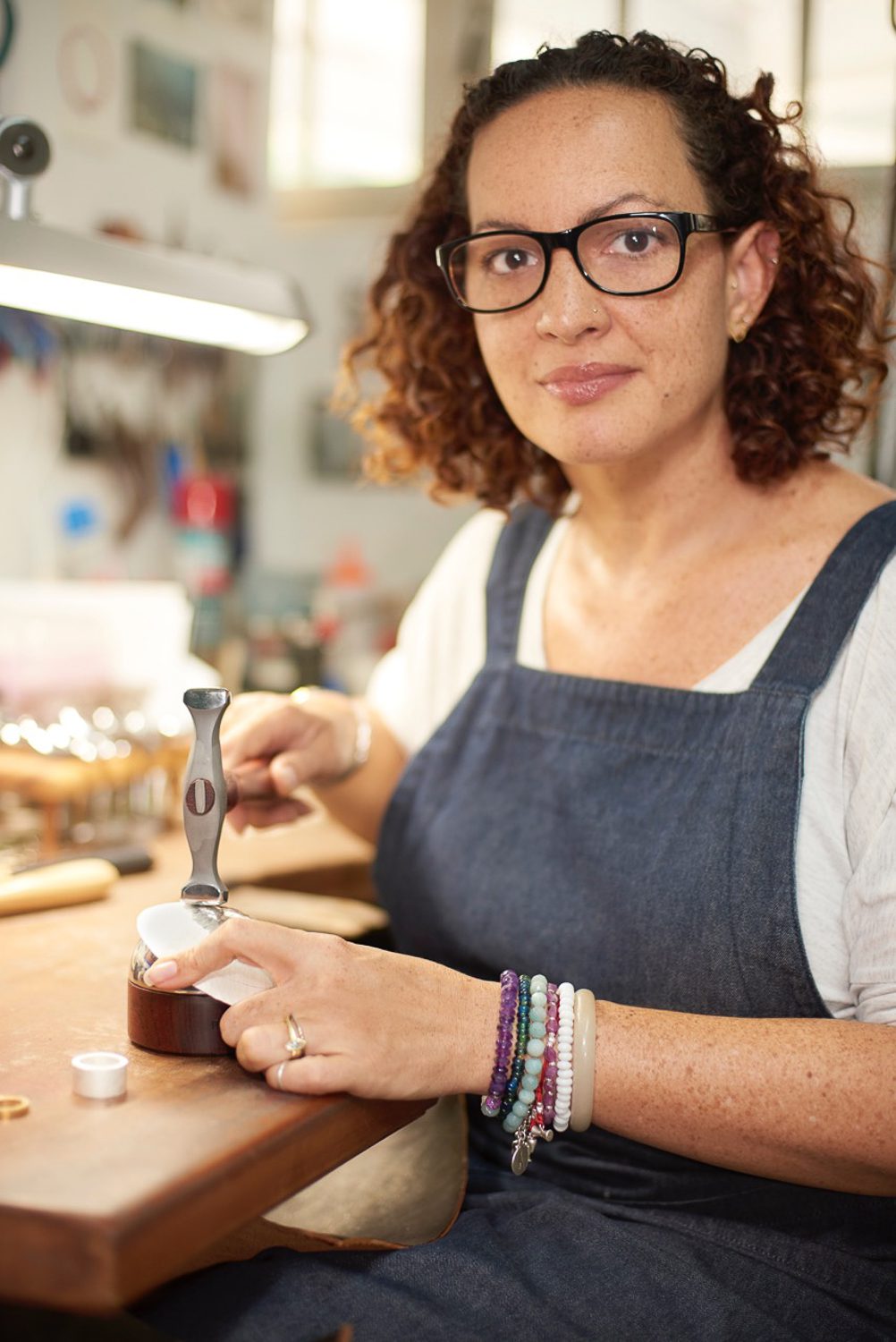
Janice Derrick

Born in Trinidad in 1972, Janice migrated to England at the age of sixteen. In 1996 she graduated with a BA (Hons) in Silversmithing, Jewellery and Allied Crafts from the prestigious Sir John Cass faculty at London Guildhall University. The following year Janice received a Clerkenwell Award from the Clerkenwell Green Association to set up her studio near the heart of London’s jewellery quarter, Hatton Garden. In 2005, Janice returned to Trinidad where she continues to develop her jewellery and silversmithing practice.

Over the last twenty one years Janice has exhibited her work in Germany, France, Ireland, the US, Trinidad, Japan and across the UK. Her pieces have been featured in Vogue (UK), Harpers and Queen, World of Interiors, The Sunday Times (UK), The Guardian (UK), Retail Jeweller magazine (UK), Instyle magazine (UK), The Evening Standard(UK), Time Out London, The Newsday (Trinidad), Trinidad Express, Trinidad Lookbook, 6 Carlos (Trinidad) as well as The Rings Book (UK, 2002), 1000 Rings (US, 2004) and The Contemporary Jewelry Exchange (Denmark, 2015).


Images by Michele Jorsling

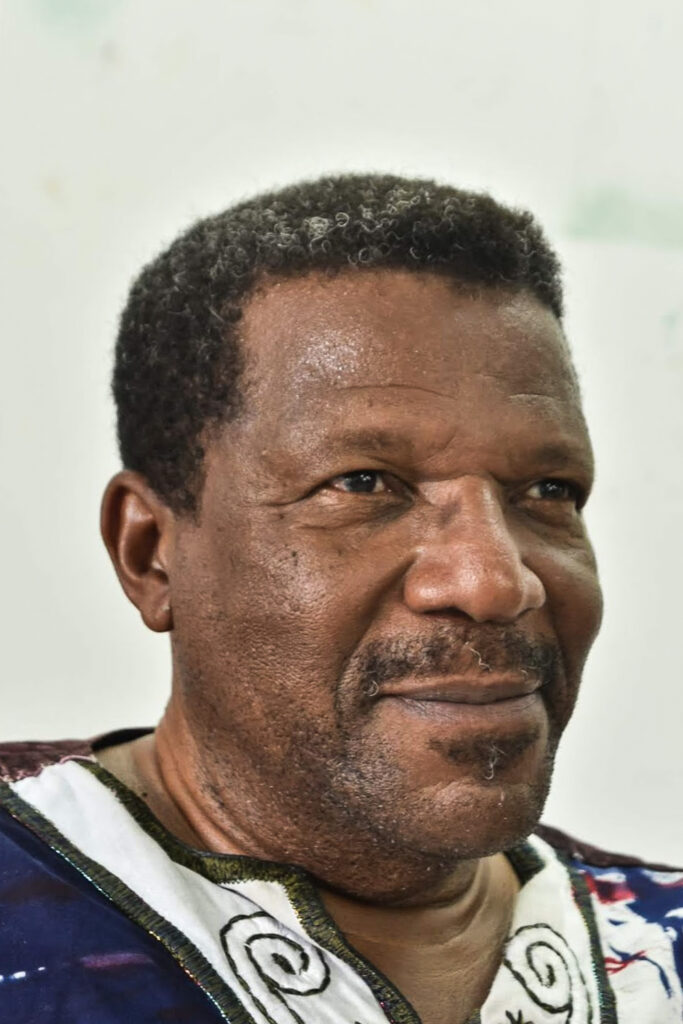
Kenwyn Crichlow

Kenywyn Crichlow is a practicing artist who has participated in solo exhibitions in Trinidad and Tobago and internationally from 1981 to present. Mr. Crichlow has taught at every level of the Education system in Trinidad and Tobago; primary and secondary schools, Teachers College and at the University of the West Indies. Kenwyn is also a key researcher on the history of visual arts in the Caribbean.
His paintings explore narratives of our culture and identity through vibrant, colourful compositions.

They seek to capture the full range of our experiences, and open us to the images that reside deep in the heart. 


Image by Melissa Miller 

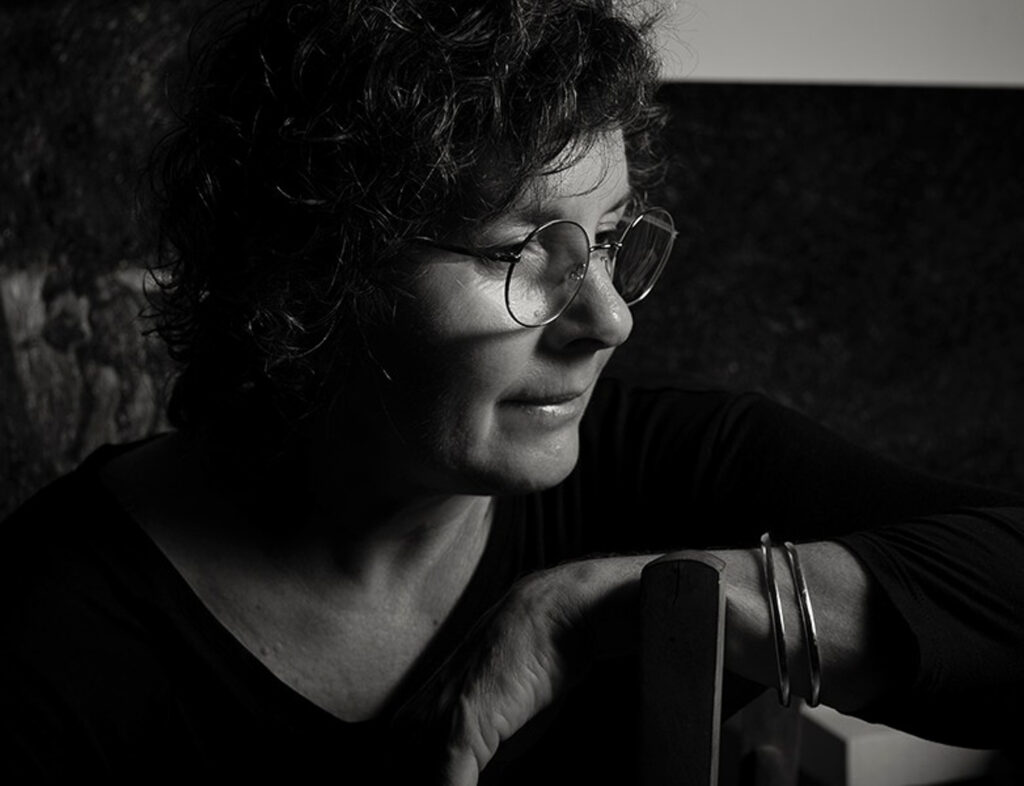
Roberta Stoddart

In the earliest world when all was dark, the bat was born. Half-bird, half-beast, this liminal, mysterious and erratic creature is somehow apart or in-between, and does not fit into the normal order of things.
From the dark underworld comes the bat, ambiguous mentor of the foreboding night, gliding to its banishment with supernatural trickery, magic, witchcraft, shape-shifting, malevolence, death, destruction and decay. Re- imagined as fiction- al characters in popular culture, this nocturnal animal becomes legions of versions of the evil vampire Count Dracula and the hero Batman.
Positively aligned in some cultures with happiness, longevity and good fortune, bats also present as sacred spirits – intuitive, watchful, wakeful, and vigilant. Imag- es of bats appear in Heraldic symbols, coats of arms and State insignias.
In the beginning, human beings and all living creatures existed together in har- mony, mutual respect and inter-dependence. Then humans disregarded animals’ rights, provoking their hostility. Human beings do not share the planet with ani- mals and with nature. Instead we dominate and inflict unimaginable suffering on most life forms and on each other, resulting in climate change and an alarming number of other escalating catastrophic events.
Man’s destructive environmental, ecological and lifestyle practices coupled with his invasion of animal territories, create Monster Mergers in which viruses invade human bodies as their hosts. Deadly diseases have been unlocked – more recently the 1918 Bird Flu Influenza, HIV/Aids, Sars, Mers and Swine Influenzas. Despite being generally beneficial to our planet’s ecosystems, bats are the most likely source of the novel Coronavirus. The highly mobile, social, and long-lived bat is a natural reservoir of many pathogens and is perfectly situated to spread disease.
The great Amazon Forest, often referred to as “the Lungs of the World”, is now being plundered and stripped of its resources at breakneck speed by corrupt political practices and big business. What new and as yet unknown diseases will be unlocked from the Amazon jungle?
The world has been forcibly brought to its knees by Covid-19. Surely, this is THE “opportunity of our lifetime” to change the way we live. But will we change? Or will we continue in our self-inflicted suffering towards early extinction?
-Roberta Stoddart

Image by Abigail Hadeed 

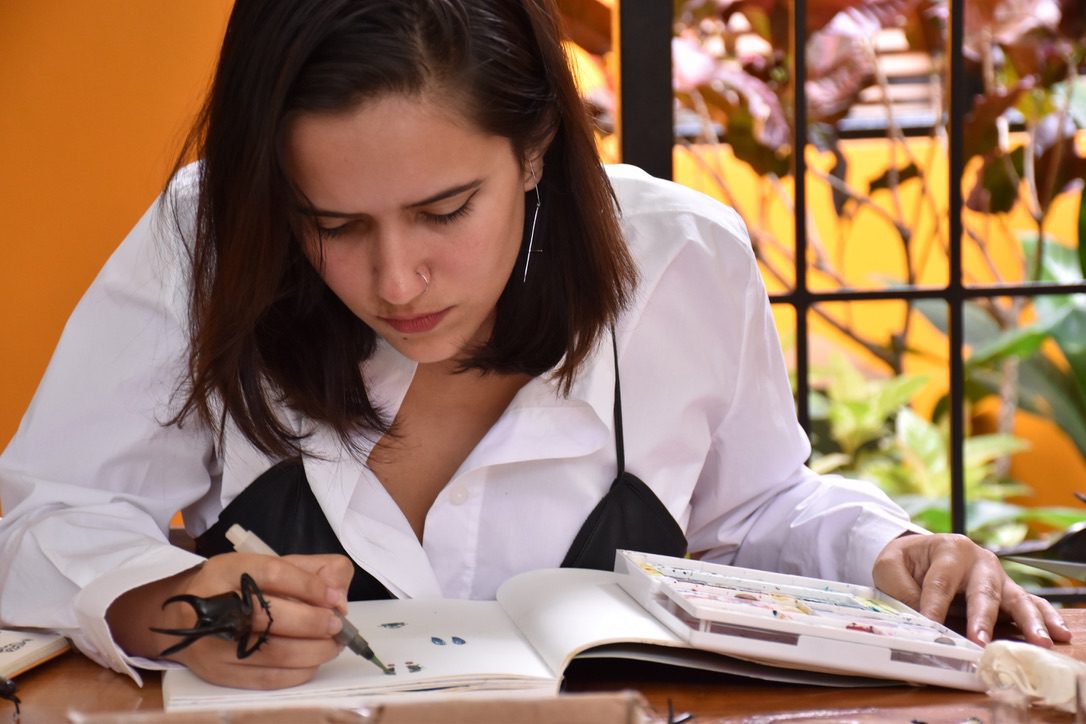
Mairi Millar

Mairi Millar is a Trinidadian artist based in London. Her work explores the beauty of nature’s discarded and “collaborating with chance”, creating works from found natural objects. Primarily through the language of jewellery, these forgotten or “finished” objects are elevated to the state of a relic.  An eggshell is proof something emerged, a feather means something flew. These found objects are charged with an intimate vibrancy compared to the seemingly valuable materials they are set in. Her practice is an ode to the finder’s treasure; from human hair to houseflies; she does not shy away from the macabre to find beauty and hope.

Mairi is an alum of the Rhode Island School of Design (2018) and the Royal College of Art (2021). In 2021 she was awarded a residency at The Sarabande Foundation in London established by Lee Alexander McQueen.

Image by Melissa Miller

CHE LOVELACE